

The AI said it would work” isn’t a particularly strong incident report. Dimitar Bezhanovski has a habit of checking anyway.
Dimitar has been a software engineer since 2018, mostly on backend systems and infrastructure. Today he is a Senior Software Engineer in our AI Solutions Delivery team, working on TRYche, our business agent framework. The job is mostly plumbing: APIs, MCP, RAG pipelines, document processing, and connecting agents to the systems they need.
We asked him about a “small change” that turned into a review of an entire processing pipeline, what never goes to an AI without a human check, and how learning on the job works at IWConnect.
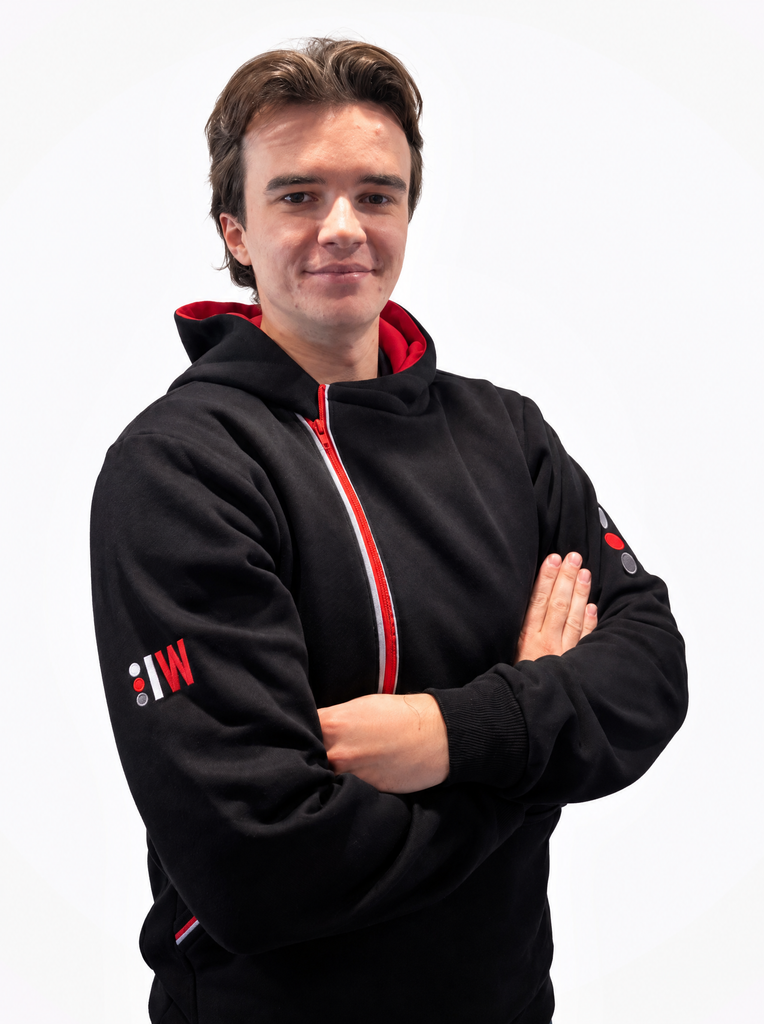
IWC: What is your role at IWConnect, and how did you end up working on AI?
Dimitar: I’m a Senior Software Engineer in the AI Solutions Delivery team. I’ve been working in software engineering since 2018, mostly on backend systems and infrastructure.
I’ve always enjoyed experimenting with new technologies, and AI seemed worth looking into. There’s an extraordinary amount of hype around it, so I thought I’d see what it could actually do. Turns out, quite a lot. Occasionally even what you asked it to.
IWC: You work on TRYche, our business agent framework. What is your part in it, in plain words?
Dimitar: Mostly the backend side. APIs, MCP, RAG pipelines, document processing, and connecting agents to external systems.
Essentially, making sure the agents have access to the right information and can actually do something with it.
It’s a lot of plumbing, really. We’ve just given the plumbing artificial intelligence.
IWC: Tell us about a problem that stuck with you recently. What did you try, and how did you get out of it?
Dimitar: We had an issue with image handling in our document processing SDK. Different parsers handled images differently, and some functionality had ended up in rather creative places.
What looked like a small change turned into a review of the entire processing pipeline. A fairly standard outcome when someone says, “This should be straightforward.”
I went through the implementation, worked out where things were going wrong, and helped clean up the approach.
Nothing terribly exciting. Just several hours of discovering why the original estimate was optimistic.
IWC: What do you never leave to an AI without checking yourself?
Dimitar: Security, authentication, infrastructure, and pretty much anything going into production.
AI is very good at giving convincing answers, including when it has absolutely no idea what it’s talking about. A skill previously reserved for certain meetings.
I use it daily, but I still check the output. “The AI said it would work” isn’t a particularly strong incident report.
IWC: When you wanted to learn something new for your work, how did IWConnect support you?
Dimitar: I’ve had the opportunity to work on quite a few things that were new to me, particularly around AI agents, MCP, RAG, and Azure infrastructure.
There’s been room to experiment, discuss ideas with colleagues, and figure things out along the way.
I generally learn best by building something, breaking it, and then reading the documentation I probably should have read first. Fortunately, there’s been plenty of opportunity for that.