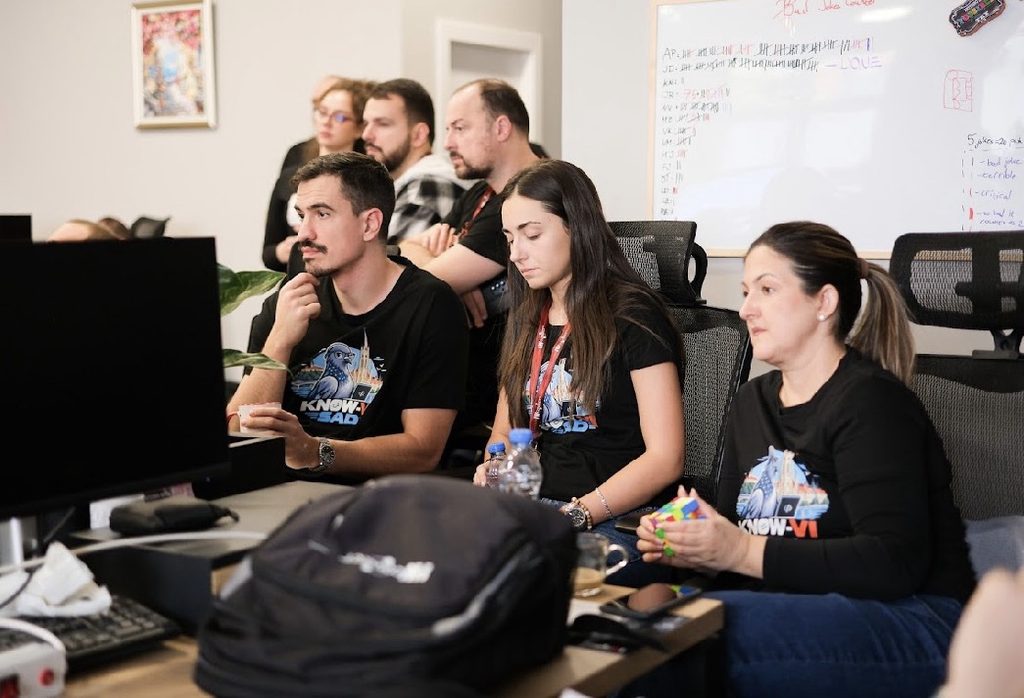

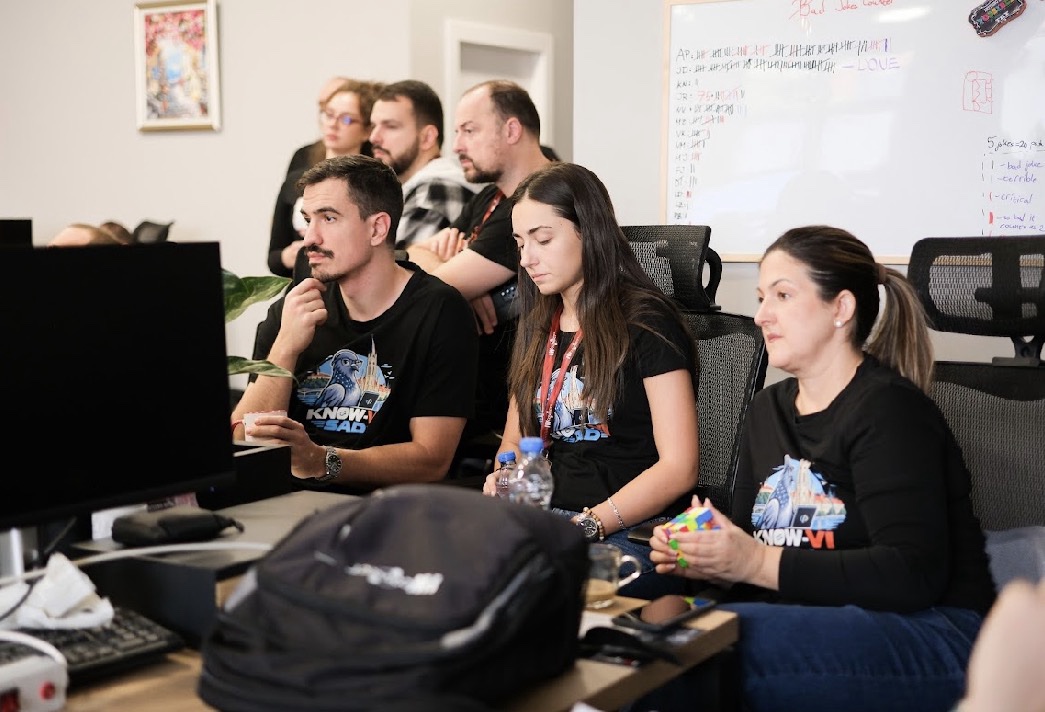
At 04:00 in the morning, six engineers were still at the same table in Novi Sad. Robin’s latest Playwright test run had just come back red, and one failing scenario stood between them and a working demo. Nobody left.
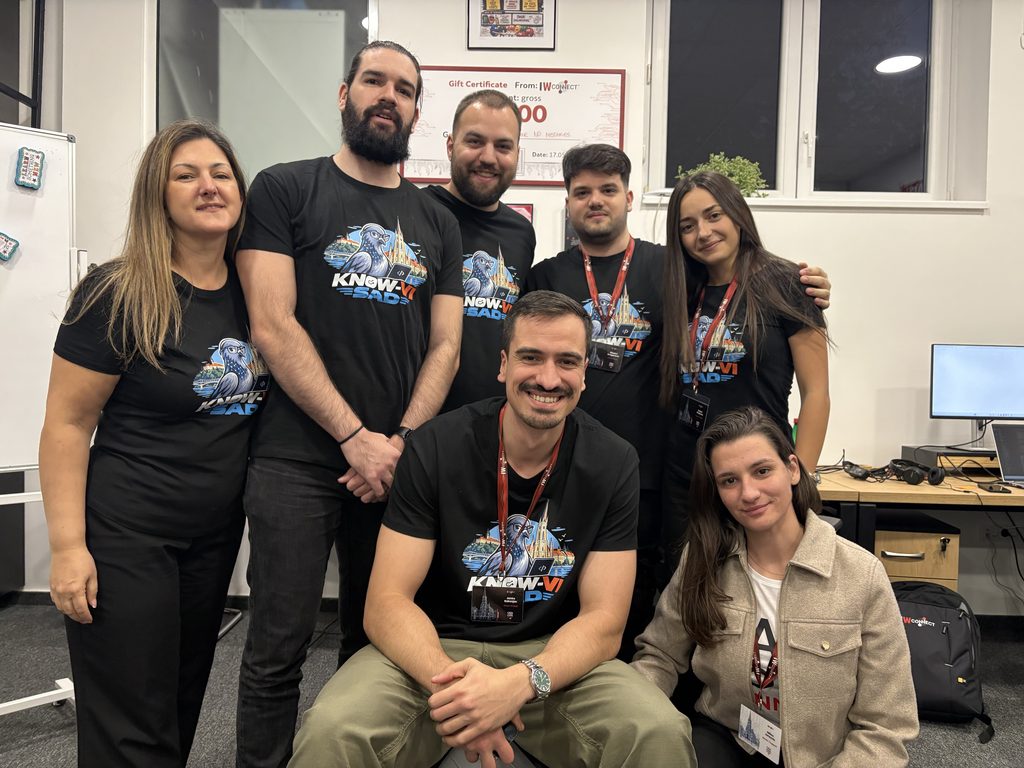
They were Know-VI Sad, three data engineers, two integration engineers and one QA engineer, named after their city. Over one night at AI Code Connect 4 in October, they built an AI solution for our HR department using Robin. This is what happened when each of them stepped outside their job title.
Why do engineers leave their lanes at a hackathon?
For Janko Rakonjac, a data engineer at his second hackathon, that’s the point. “Each time, I end up working on things outside my specialization and learning a lot along the way,” he says. This time he took on unfamiliar tasks and then the harder one: presenting the solution. “Public speaking is well outside my comfort zone, so volunteering to present was a real stretch, and I’m glad I did it.”
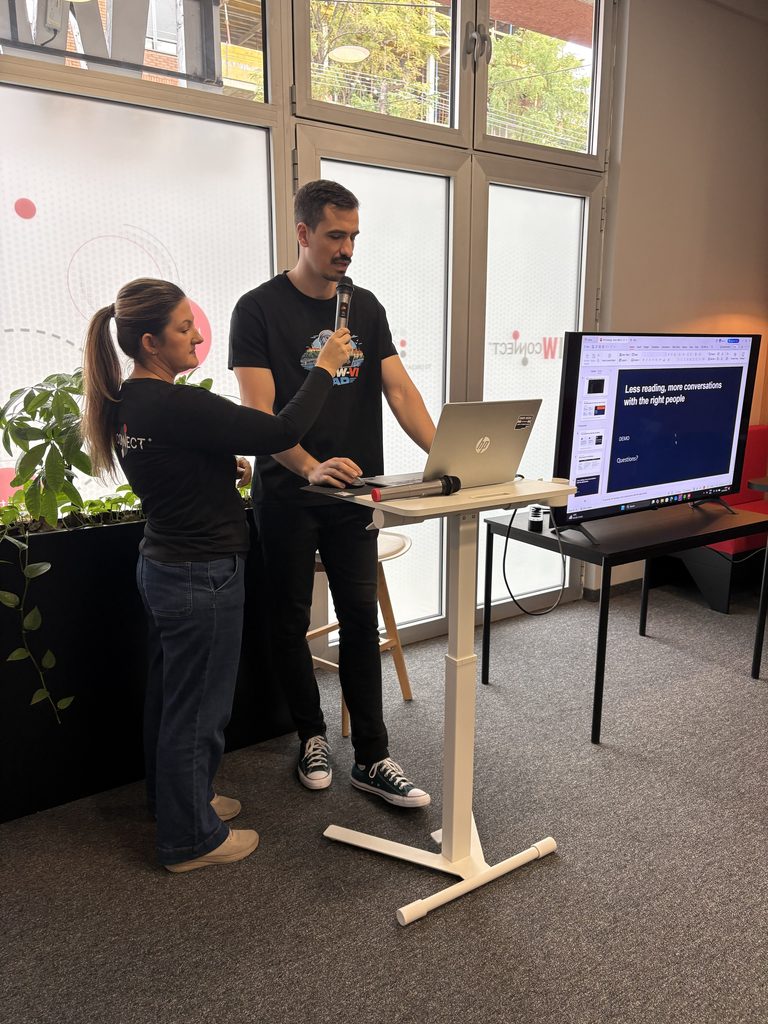
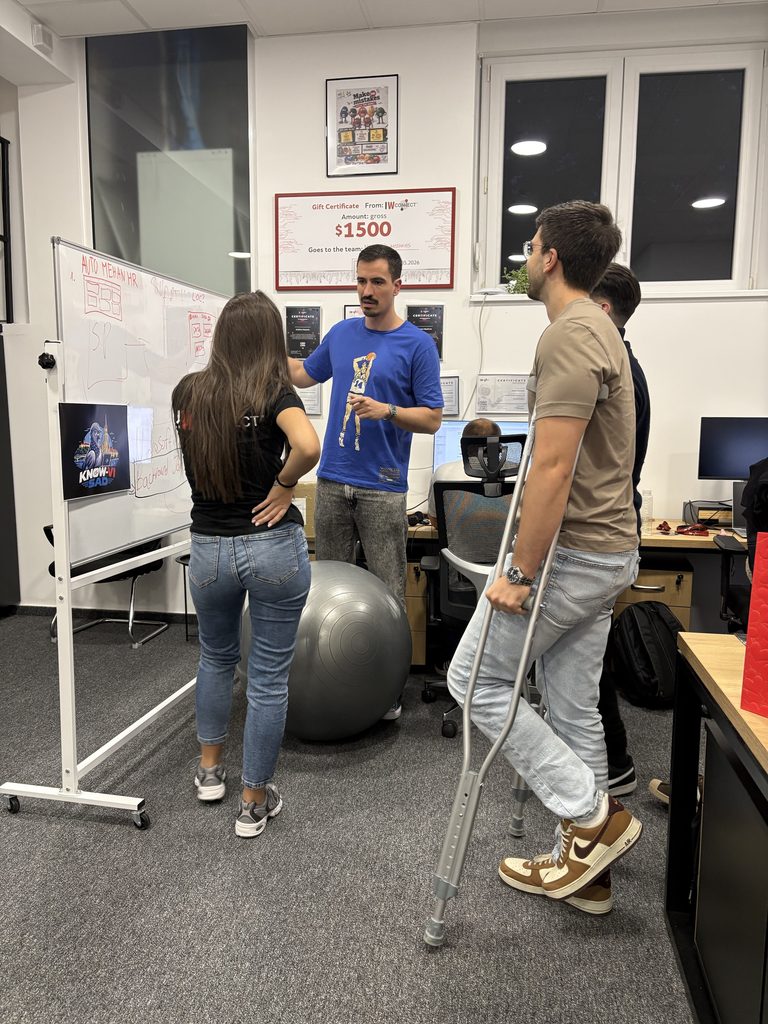
Integration engineer Borka Veskovic would play keyboard in the team band, because “it can hold the rhythm, add texture, and bridge all the other instruments together.” Her lesson for companies: “On a hackathon, there is no room for over-engineering or endless meetings. Teams have to rapidly prioritize the absolute core features, experiment quickly, and adapt without ego when something fails.”
What kept a cross-functional team going all night?
Mladen calls one choice the most important of the event: “Deciding to push through the night together, no matter how challenging things got.”
Data engineer Nemanja Vojnic’s biggest lesson came from those hours: “Never quit. Whenever you feel like there is no chance of finishing in time, keep pushing and make the team feel everything is possible.” Away from data pipelines, he’s part of a family business that grows flowers.
Aleksandar Pavlovic, also a data engineer, credits unity and resilience. “We were always going to finish this project, and we were always going to do it together,” he says. “It might look like we’re just having fun, but there’s much more going on underneath.” His favorite travel destination? “Wherever my girlfriend wants to travel next.”
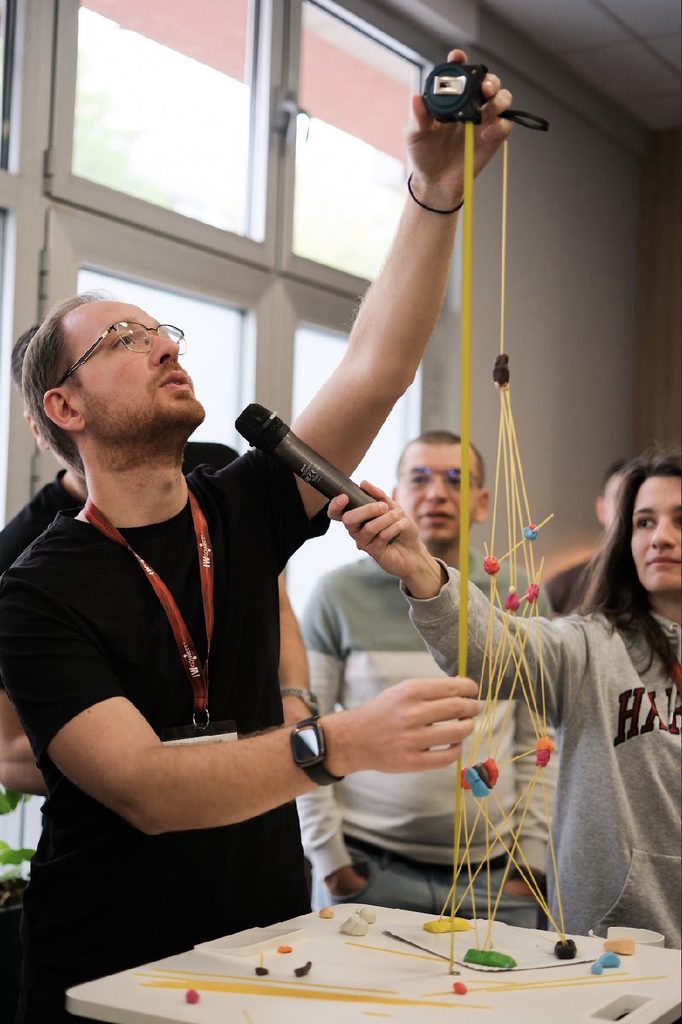
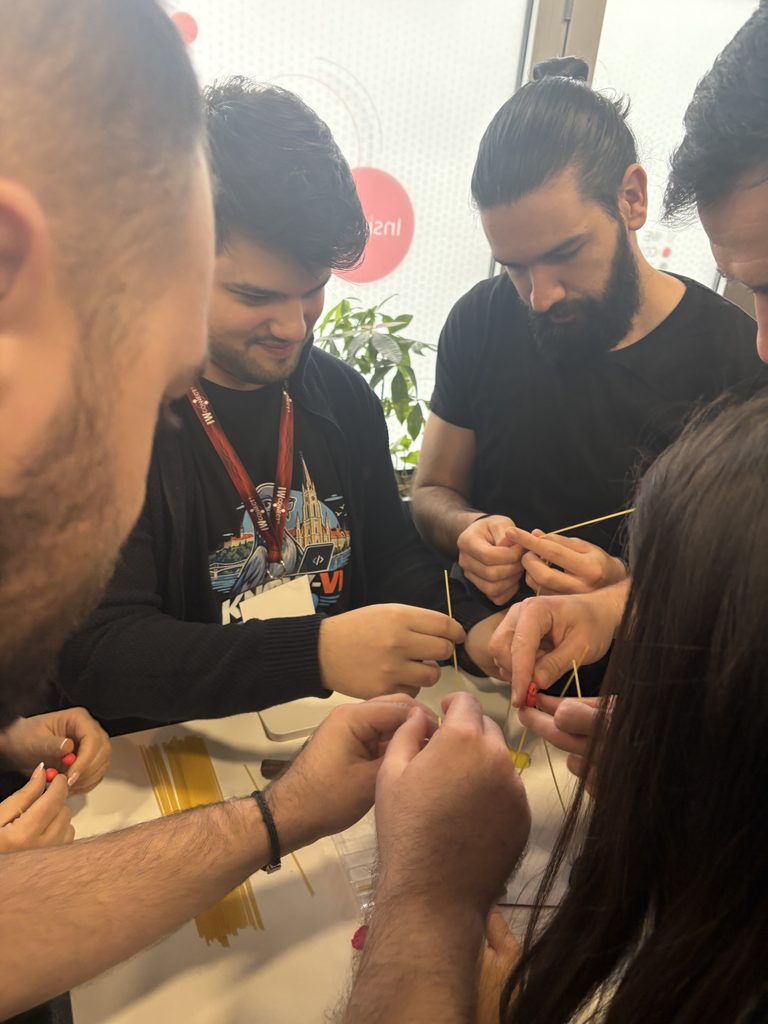
QA engineer Verica Solin remembers two moments. One was a spaghetti tower challenge, where everyone “without much communication or coordination, simply contributed in their own way.” The other came at the finish. “After all the brainstorming, building, testing, and fixing, seeing the complete solution actually work was incredibly rewarding.”
Curious about more than code
Janko has been reading Benjamin Labatut’s When We Cease to Understand the World, about scientists whose discoveries outran their own grasp. It feels relevant to AI right now, he says, as we build systems “that work remarkably well but that we don’t always fully understand.” Verica, given one day in anyone’s job, would pick HR, to learn “what motivates people, what challenges they face.”
A data engineer reading about the limits of understanding. A QA engineer who wants to test the people side of the business. Know-VI Sad spent the hackathon trying the job next to their own, and that habit shows everywhere else.
This is what working with a team like this feels like. See our open roles.