
Every time you flip a switch, you are relying on one of the most complex software ecosystems on the planet. Behind the seamless delivery of electricity is a network of market coupling algorithms – EUPHEMIA for the Day-Ahead market, XBID for Intraday trading – all operating under immense, second-by-second pressure.
Most people assume that quality assurance in European energy markets works like QA anywhere else: you write test cases, find bugs, fix them, and ship. The software either works or it doesn’t. A defect is a defect.
This assumption is entirely reasonable. Modern quality assurance is built on universal engineering principles: requirements traceability, test coverage, regression safety, and risk-based validation apply whether you’re testing a banking platform, a telecom system, or a trading application. In most industries, applying these structured QA practices rigorously is enough to ensure reliability, stability, and user trust.
But as a Lead QA Engineer in this sector, I’ve learned that this assumption fundamentally misunderstands what we do. In energy markets, quality assurance isn’t about validating features – it’s about validating the economic, regulatory, and physical stability of Europe’s entire power system. The stakes are continental. The definition of ‘correct’ has layers most industries never encounter. And the ultimate measure of our success is something counterintuitive: silence.
What follows are four truths I’ve learned from working at this intersection of software, economics, and critical infrastructure – truths that challenge conventional assumptions about what QA means when failure isn’t an option.
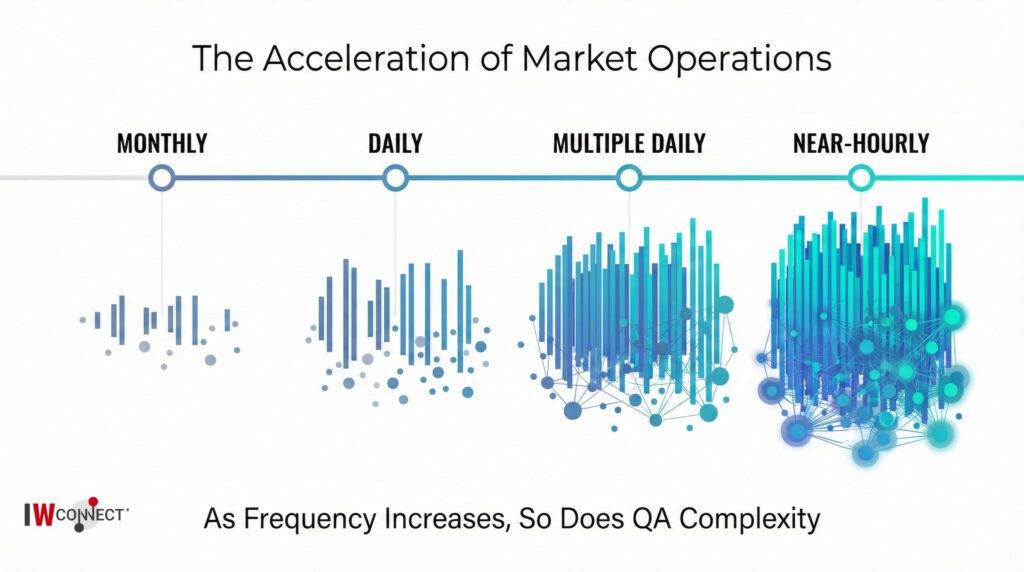
Over the past 7 years, I’ve worked on auctioning and balancing platforms for a major European transmission system environment serving more than 40 million people. During that time, I’ve seen market operations evolve from infrequent procurement cycles to daily auctions, with current initiatives moving toward multiple auctions per day and, ultimately, near-hourly balancing processes.
1. It’s Not About Finding Bugs – It’s About Upholding Stability
In most industries, a software bug might cause inconvenience or financial loss. In the energy sector, the consequences operate on a national and continental scale.
From a QA perspective, failures in energy market systems quickly move beyond technical defects into regulatory and operational risk. For example, a system that miscalculates available cross-zonal capacity could cause a market deadline to be missed, triggering formal non-compliance under European energy regulations and leading to fines or mandatory corrective actions.
Another real-world consequence occurs when an auction result incorrectly clears balancing power that cannot physically be delivered: hospitals in one region experienced near-instantaneous risk to critical power-dependent operations, requiring emergency backup activation to maintain service continuity.
The primary goal of quality assurance in energy markets is not simply to find functional defects but to uphold the stability of the entire system. A hidden defect can propagate across countries within minutes, leading to incorrect energy prices, market decoupling, or in the worst-case scenario, cascading blackouts.
This pressure is intensifying. The shift to 15-minute market time units means our systems must now process four times more data within even tighter deadlines. Upholding stability also means ensuring compliance with non-negotiable regulations like the Clean Energy Package, which requires operators to offer at least 70 percent of transmission capacity.
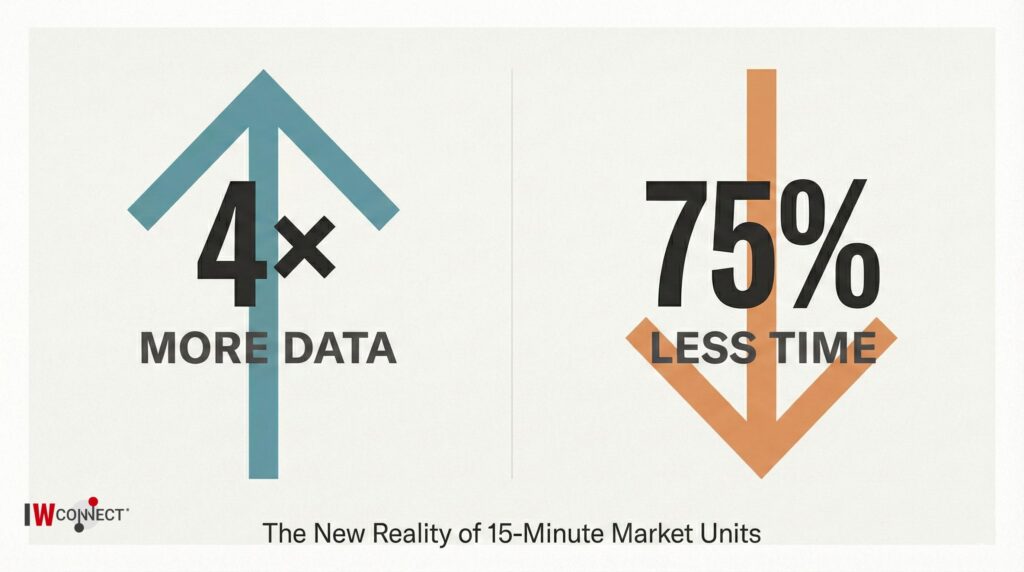
Where we once focused on validating a single monthly balancing auction with a few hundred core test scenarios, the transition to 15-minute market time units now requires daily validation across all regions, including hundreds of thousands of bids and several hundred system and edge-case scenarios per auction.
Processing windows that previously allowed 1-2 hours per auction are now compressed to 20-30 minutes, requiring precise automation, parallelized test execution, and real-time monitoring. With the roadmap moving toward multiple auctions per day and eventually near-hourly balancing cycles, the scale and intensity of QA work have increased dramatically, making rigorous testing a cornerstone of market stability.
In the energy sector, QA is not a supporting function – it is a critical stabilizing force for the entire system.
2. A ‘Correct’ Answer Can Be Disastrously Wrong: The Problem of Multi-dimensional Correctness
One of the most counterintuitive principles in energy market testing is that an auction result can be technically valid but still represent a catastrophic failure.
I call this the challenge of Multi-dimensional Correctness. In most software, ‘correct’ is binary: the output matches the expected result, or it doesn’t. In energy markets, correctness exists across at least three dimensions simultaneously:
Technical correctness: Does the algorithm produce a mathematically valid result?
Economic correctness: Does the result reflect legitimate market dynamics and fair pricing?
Physical correctness: Can the grid actually deliver this energy without overloading infrastructure?
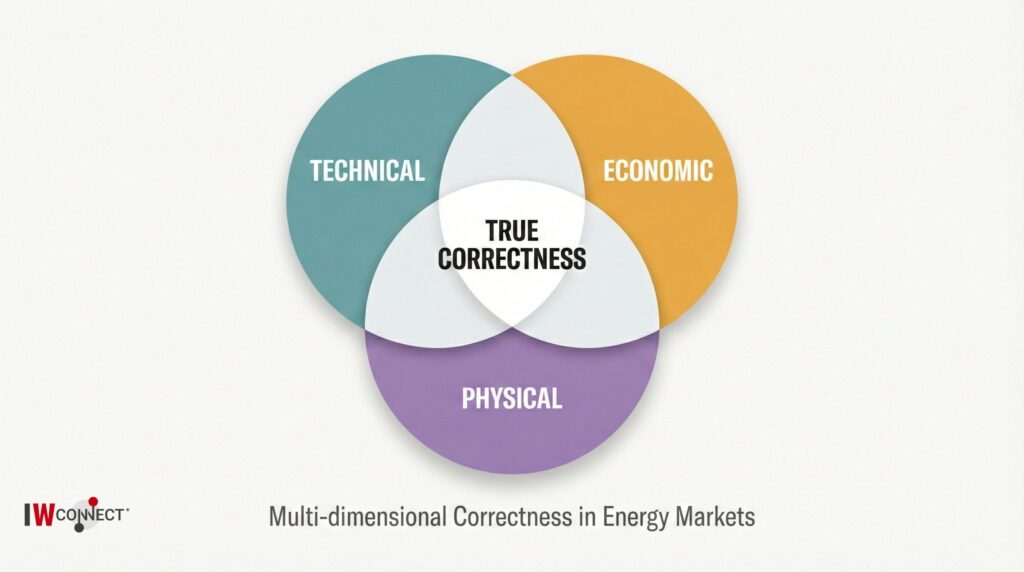
A result can pass one or two dimensions while catastrophically failing the third. The industry’s shift from simple Net Transmission Capacity models to complex Flow-Based allocation – which models power flows across the entire grid – makes this risk even more acute.
In one trial simulation, a delay in receiving balancing bids caused the system to miss the automatic fallback trigger. The auction result appeared valid on the platform, but without the fallback, some market participants would have been allocated energy that could not physically be delivered. QA caught this timing edge case before production, highlighting how critical negative scenarios are in energy systems.
For example, a trade that clears at a reasonable price but would physically overload a transformer is a failure, regardless of how well the software performed its calculations. Our job is to test across all three dimensions simultaneously – something most QA frameworks aren’t designed to handle.
The most dangerous defects are the ones that look correct. Multi-dimensional Correctness means validating not just what the software calculates, but what the real world can actually deliver.
3. Failure Isn’t an Option – It’s a Core Requirement
In many software domains, negative scenarios are treated as edge cases – the things you test after the happy path works. In energy markets, they are explicitly defined ‘first-class requirements.’
This makes sense in most contexts, resources are limited, test cycles are finite, and testing every possible failure mode can feel like diminishing returns. In most industries, when 95% of users follow the happy path, focusing on that majority is rational and efficient.
But in energy markets, that remaining 5% isn’t an edge case. It’s where continental-scale consequences live. A delayed auction result, a misreported cross-zonal capacity, or a missed fallback trigger can propagate across multiple countries within minutes, causing regulatory breaches, operational instability, or financial exposure.
For this reason, we treat failure scenarios as first-class requirements, dedicating significant portions of our test cycles, often 40-50% – specifically to negative scenarios, timing issues, and extreme market conditions.
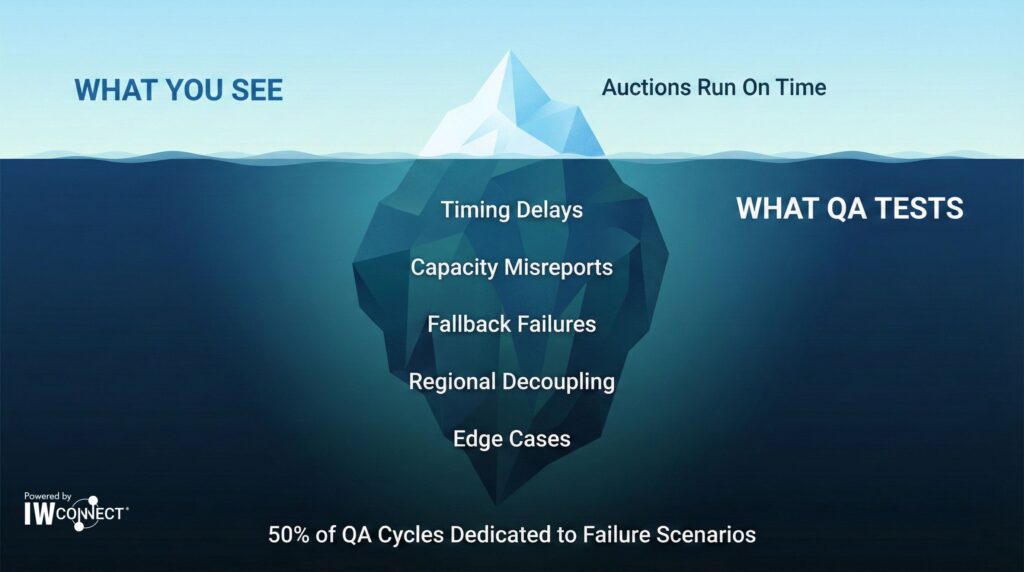
We spend a significant amount of time validating that systems behave predictably and correctly when things go wrong.
Approximately 50% of our QA cycles are dedicated exclusively to failure scenarios, covering technical, economic, and physical dimensions simultaneously.
For every positive test case that validates correct auction outcomes, we create two to three corresponding negative scenarios simulating timing delays, capacity misreports, partial decoupling, or fallback failures.
This structured approach ensures that high-risk situations, the ones that could propagate across regions or trigger regulatory breaches, are systematically addressed before any live deployment.
Consider the scenarios we must validate:
What happens if auction results are delayed beyond a strict deadline?
What happens if one region cannot participate?
What happens if capacity changes minutes before gate closure?
The system is required to automatically cancel the auction or trigger a clean fallback procedure to prevent market instability. Failing to handle these scenarios precisely as defined is not just a software bug – it is a compliance breach according to established market rules.
Balancing Auction Near-Miss
During testing of a daily balancing auction, our QA team noticed that a software update altered how balancing bids were aggregated across multiple providers.
The auction results were technically correct. All calculations passed, but if executed, a small subset of bids could have been mis-prioritized, potentially triggering higher-than-necessary balancing energy procurement costs.
Our negative scenario tests caught this before production, ensuring both regulatory compliance and economic efficiency were preserved.
In energy markets, failure scenarios aren’t edge cases – they’re where the real risk lives.
4. The Ultimate Goal of Our Work is Engineered Silence
The final, and perhaps most surprising, takeaway is that the ultimate sign of our success is when nothing happens.
I’ve come to think of this as Engineered Silence. The public rarely hears about the work of QA teams in the energy sector, and that is by design. The absence of market-disrupting headlines, incidents, or emergency calls is not an accident – it is the direct outcome of rigorous, domain-aware validation designed to catch risks before they become operational reality.
This creates a strange paradox for quality assurance in energy markets. In most fields, success is visible: shipped features, solved tickets, improved metrics. Our success is measured in the problems that never materialize – the price spikes that didn’t happen, the decoupling events that were prevented, the compliance breaches that were caught in testing.
A quiet morning in operations
Market operators log in, review auction results, and see that all balancing allocations and cross-zonal capacities have cleared correctly. There are no alerts, no emergency emails, and no unexpected price spikes.
For QA, this is the ultimate signal that all automated checks, negative scenarios, and regression tests are functioning perfectly.
A successful go-live
After deploying a major update to the auction platform, all daily and intraday auctions execute on schedule. The system automatically validates bids, calculates prices, and applies fallback procedures where necessary, without any manual intervention.
From a QA perspective, this confirms that rigorous multi-dimensional testing translated directly into operational reliability.
A crisis-that-wasn’t…
During stress testing, a scenario simulates unusually high demand combined with partial market participant unavailability.
Thanks to pre-tested safeguards and negative scenarios, the system automatically recalculates allocations, prevents overcommitments, and maintains compliance. No alarms are triggered, no manual corrections are required. What could have become a serious operational incident is quietly prevented.
When QA works well, nothing happens. No incidents. No headlines. No emergency calls. That silence is not accidental – it is engineered.
Engineered Silence is not the absence of work – it’s the presence of invisible work done right.
Conclusion
The unique and critical role of quality assurance in energy markets is to serve as the final safeguard between mathematical abstraction and physical reality. It protects market integrity, ensures regulatory compliance, and upholds grid security.
Every day, we navigate Multi-dimensional Correctness – ensuring that technically valid results are also economically sound and physically possible. We treat failure scenarios as first-class requirements, not afterthoughts. And we measure our success not in features shipped, but in Engineered Silence – the absence of the problems we prevented.
As our world relies more heavily on complex digital infrastructure, it’s worth remembering that trust in our most critical systems is built not just with steel and wire, but with meticulously validated code – and the QA teams who ensure that ‘correct’ truly means correct across every dimension that matters.
If your organization is building or maintaining mission-critical energy systems, we’ve spent nine years learning what Engineered Silence requires.