

“Slow clock tick error” on EMS side is a common issue for most of the companies that are using EMS for transport. The reason for this error is that the EMS server gets very busy and the processing of messages is delayed.
We are seeing this frequent error message in the EMS logs and here is an example of the error from the EMS server:
• Error stack trace
The number 30 indicates the delay when the timer thread is behind the current time. 30 seconds is the time difference.
Our Implementation:
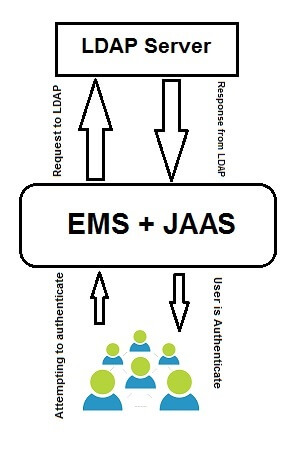
The EMS server in our system is configured to use LDAP credentials for connecting. Because of that, we have implemented a custom JAAS java class which will allow our external clients to use their LDAP credentials to log in to the EMS server.
- JAAS Config file:
If some of the external user is NOT authenticated for a longer time (hours or days) on the EMS server and try to log in, we conclude that the “Slow clock tick” error is generated in the EMS log file during user authentication on the EMS server via JAAS.
Solution
To eliminate this error we must make a couple of changes in the JAAS config file and also in the java class. So in the java class “LDAPLoginModule” we added logic to support caching of user information for better performance. Therefore EMS does not need to connect to the LDAP server each time a user is trying to connect to EMS. Also, we have updated the Java class to use filters (user/group) to narrow the search scope to LDAP.
- JAAS Config file Updated